
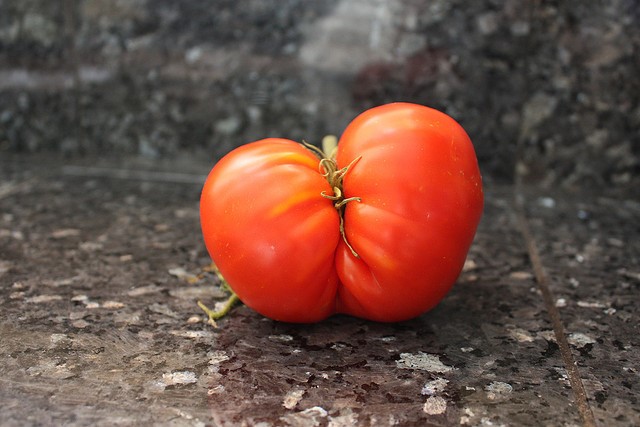
 (Feature image credit: “Beefsteak Tomato – Front” Prizmatic/Flickr, CC)
The Issue
When you walk into the grocery store and are faced by shelves of apples, which one do you choose? Many consumers would choose a beautiful looking apple over a blemished one, and chances are, there aren’t many apples on those shelves that aren’t pretty close to an image of perfection. In the US, consistency in the appearance of produce is maintained by trade associations, which issue marketing orders that specify precise size, diameter, consistency, and color parameters ensuring visual uniformity across all the large grocery retailers. But these provisions are purely cosmetic. Ripeness and taste are not metrics that are taken into account, and in fact, when it comes to produce, that perfectly red round apple probably doesn’t taste much different than the mottled one with a knob at the top—the “ugly” one may even taste better.
Aside from being slightly illogical, the problem with these standards is they constitute significant losses for farmers and promote substantial food waste. Many fruits and vegetables are hand-sorted at harvest, then machine-sorted to match a specific and narrow range of attributes. Most of the rest are plowed under, thrown away, or turned into animal feed. In part because of this scrutiny, tons of edible and flavorful produce is wasted before it even gets to consumers.
A comprehensive report from the National Resources Defense Council estimates that in the US we waste over half the produce we grow, and 23% of that waste occurs in the production and post-handling phases due to damage, overproduction, labor shortages, and cosmetic standards. While it is unclear how much of this waste is due to cosmetics alone (and the amount varies by crop and some crops even have secondary outlets for which beauty doesn’t matter like baby food, juice, etc.), the amount can be significant. For example, the report quotes one large cucumber farmer who estimates that less than half his crop leaves the farm and that 75% of the cucumbers that are culled are edible. The report also cites a fruit packer who claims 20-50% of his fruit is rejected due to cosmetic standards.
European Efforts to Recapture the Ugly Rejects

In terms of waste, Europe isn’t much better. Particularly prior to 2009 they too have had strict cosmetic standards for produce (though these have been loosened since then) and waste nearly as much of their harvest. However, the EU has acknowledged that this is a problem, declaring 2014 the “European Year Against Food Waste”, and a few European grocery stores are working to change people’s perception of good produce.
In November 2013, co-op, Fruit Feia (Ugly Fruit), opened its doors in Lisbon, Portugal. According to the New York Times, the co-op, which exclusively sells reject fruits and vegetables at a discounted price, capitalized on a loophole in European market regulations that dictates rules regulating produce apply only to labeled or packaged foods. Just 6 months after its conception, Fruit Feia had sold 21 tons of produce, and had a registered list of 420 customers and a waiting list of 1,000 more (in an effort to maintain close contact with all its producers, the owner plans on keeping her operation smaller scale).
In a much more publicized effort that began early 2014, French supermarket chain, Intermarché, launched a campaign for “les fruits et légumes moches” (which they translate as “inglorious fruits and vegetables”), selling rejected produce at 30% the less than full price. To make the veggies easier to swallow, the store gave out samples of soups and smoothies made with those fruits and veggies (and eventually developed a line of soups made solely with “ugly” produce) so people would know they didn’t taste as odd as they looked. Like Fruit Feia, the campaign was a resounding success. Stores quickly sold out of the unfortunate produce and overall business increased by 24%. After Intermarché’s success, the trend has caught on in the country’s largest grocery chain, Auchan.
A Global Salute
AUSTRALIA: The retail of ugly produce is also beginning to spread globally. In December of 2014, Australia’s largest grocery store, Woolworths (also referred to as “Woolies”!) began its “Odd Bunch” campaign. The webpage for “Odd Bunch” includes testimonies from farmers about how selling ugly produce will help them save money and prevent waste.
CANADA: In March, Canada’s largest grocery conglomerate, Loblaw Companies Ltd., followed suit, launching the “no name® Naturally Imperfect™” campaign (seriously though, couldn’t they have picked a more inspired name?), which essentially mimics the Intermarché campaign, selling ugly produce (initially just apples and potatoes) at a 30% discount. The campaign was launched in all the Real Canadian Superstores and in select stores in Ontario and Quebec.
UNITED STATES: To my knowledge, the large grocery chains in the US have yet to start selling ugly produce. But a few other efforts are underway. The largest is perhaps the “Imperfectly Delicious” program adopted by foodservice company, Bon Appetit in May 2014. While this program is not targeted at consumers (the ugly produce will be prepared and served in Bon Appetit’s cafes), it is aimed at capturing what would otherwise be wasted food. In addition, former president of Trader Joes, Doug Rauch, is planning to open a grocery store/restaurant called the Daily Table which sells ugly produce from growers as well as overstock food or food that is past its sell by date from grocery stores (a lot of food is rejected for lack of understanding about what different labels like “sell by” mean—more on this coming soon!). The store will offer repackaged and/or precooked food at “prices that compete with fast food” and will target primarily low income and underserved areas.
To close, here (and here) are some highlights of cute fruit and veggie pics from endfoodwaste.org’s uglyfruitandveg initiative.
Tl;dr
Tons and tons of produce is wasted simply because grocery stores have strict cosmetic standards for what can be sold. “Ugly” produce is no less tasty, and several grocery stores around the world are starting programs selling fruits and veggies previously deemed too disfigured at a discount. These programs reduce food waste, provide more income for farmers, and bring cheap and tasty produce to consumers–a win-win all around!
Want more info on food waste?
I will try to profile other sources of waste throughout the food supply chain, but for now, the National Resources Defense Council report cited earlier is useful, easy to read, and comprehensive: http://www.nrdc.org/food/files/wasted-food-IP.pdf
 erin-lowe.com
Leave a comment